For months, when a campaign underperformed, we looked at the copy. After 5,500+ campaigns, we start the reviews two layers earlier.
Copy is the way you present a message. That message has to be relevant to whoever receives it. And for it to be relevant, the segmentation has to be narrow and precise.
That's where the review starts.
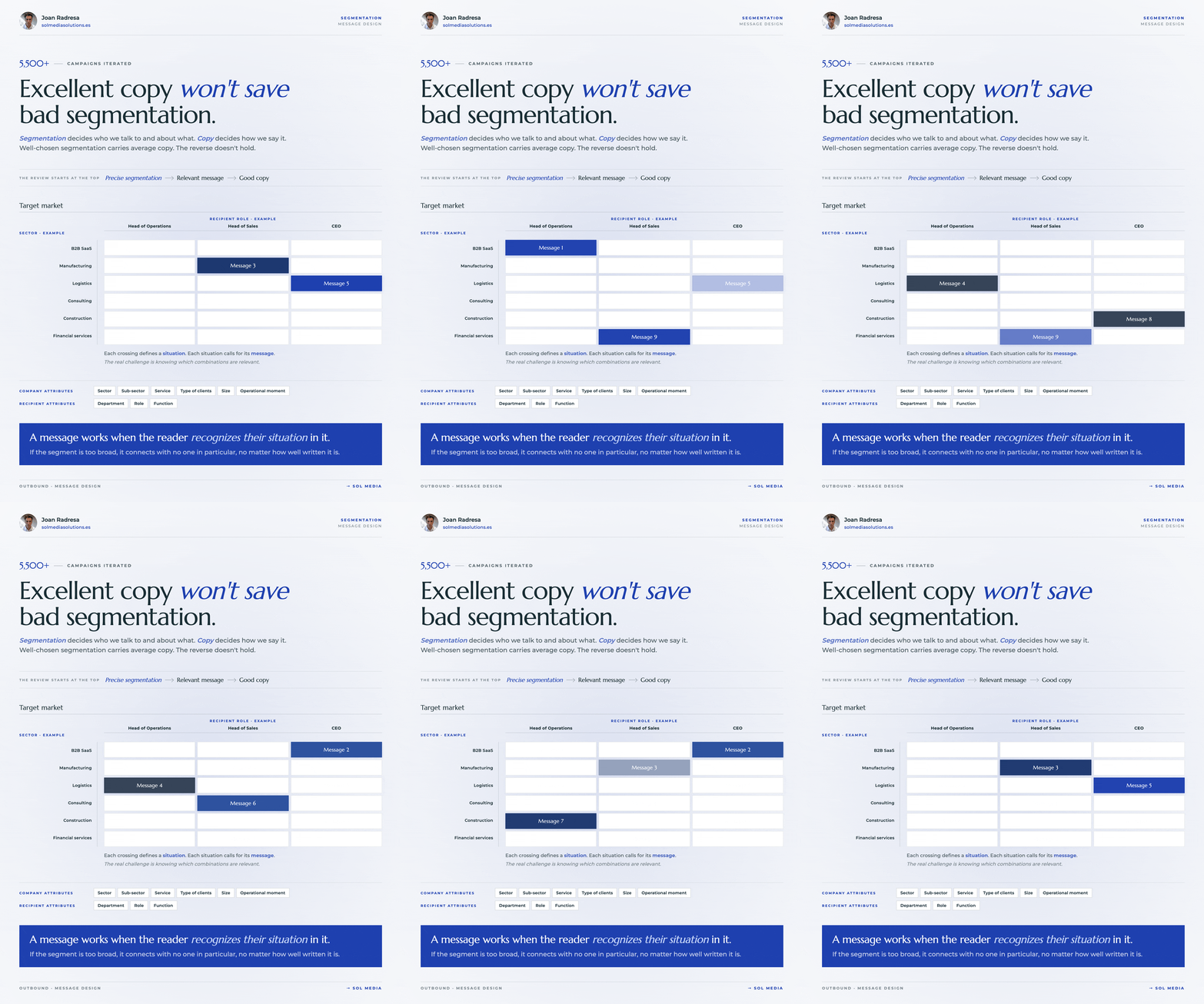
Narrowing the segmentation means writing to a specific group inside the ICP: a set of companies and recipients that share a particular situation. You define it by crossing two axes.
Company attributes: sector, sub-sector, service, type of clients, size, operational moment.
Recipient attributes: department, role, function.
Each crossing defines a group, and each group calls for its own message. The real challenge is knowing which combinations are relevant.
A message works when the reader recognizes their situation in it. If the segment is too broad, it connects with no one in particular, no matter how well written it is.
Segmentation decides who we talk to and about what. Copy decides how we say it.
After iterating across thousands of campaigns, the asymmetry is clear: well-chosen segmentation carries average copy. Excellent copy doesn't save bad segmentation.
Cold email straight to financial decision-makers produced 800+ qualified leads and 292 meetings with CFOs for Sego Finance
Read →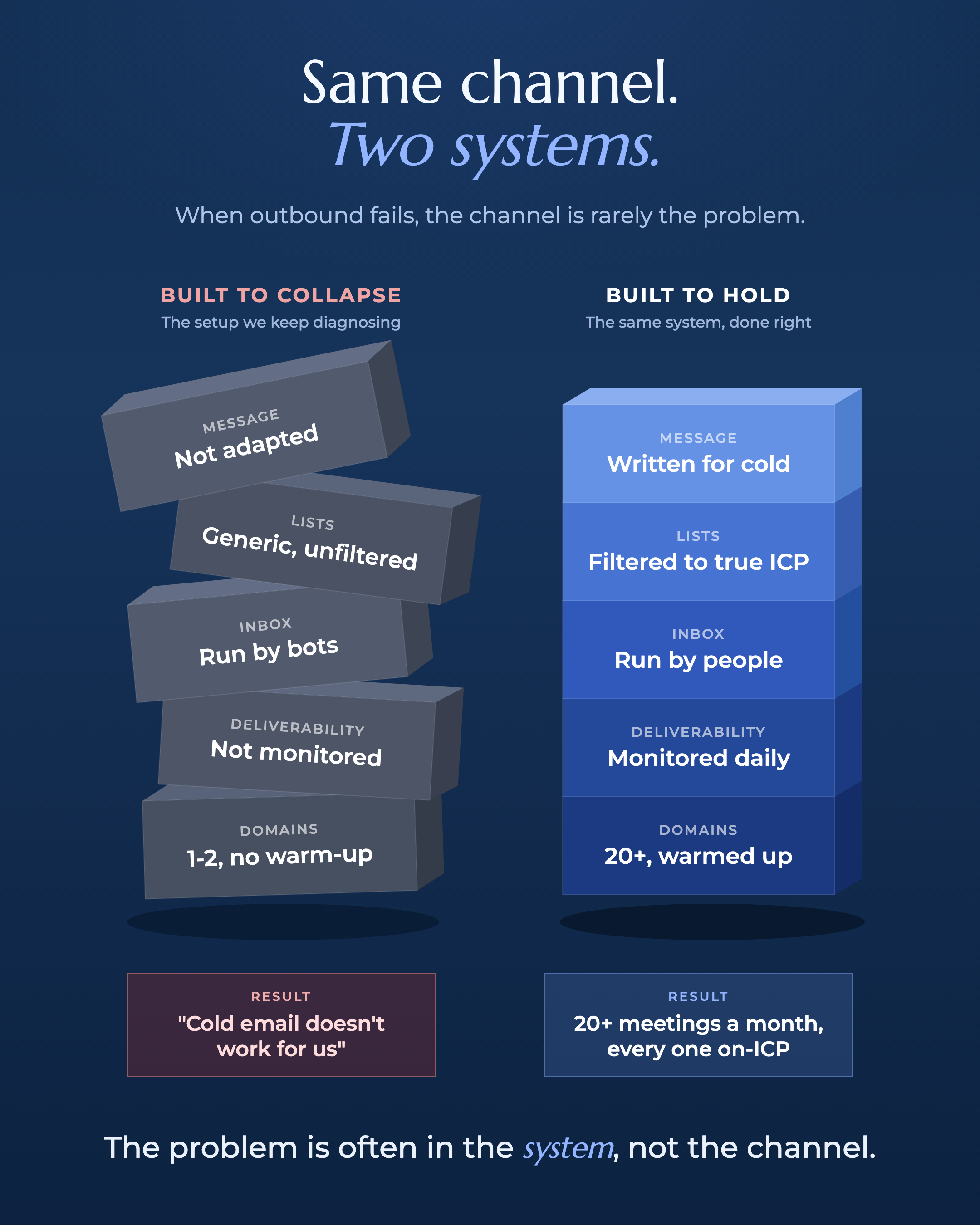
Clients arrive convinced cold email doesn't work for their industry. The real problem is a setup that was never built to last
Read →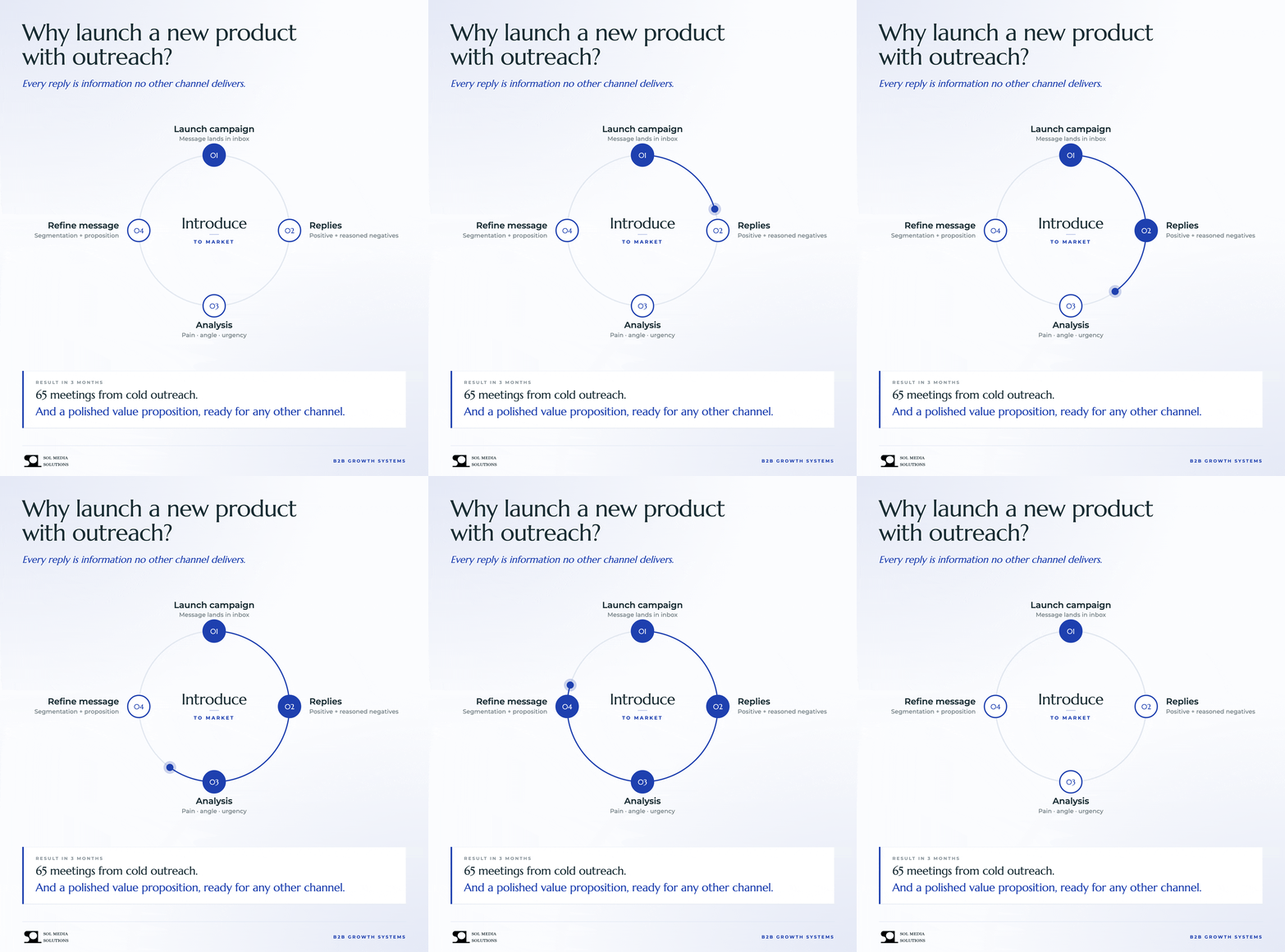
Launching an unvalidated product, we generated 65 meetings and something more valuable: market feedback that rewrote the message
Read →This is how we think and execute. If you want to see how it would apply to your case, let's talk.
